

Maid Service With Laundry: A Skidaway Island Guide
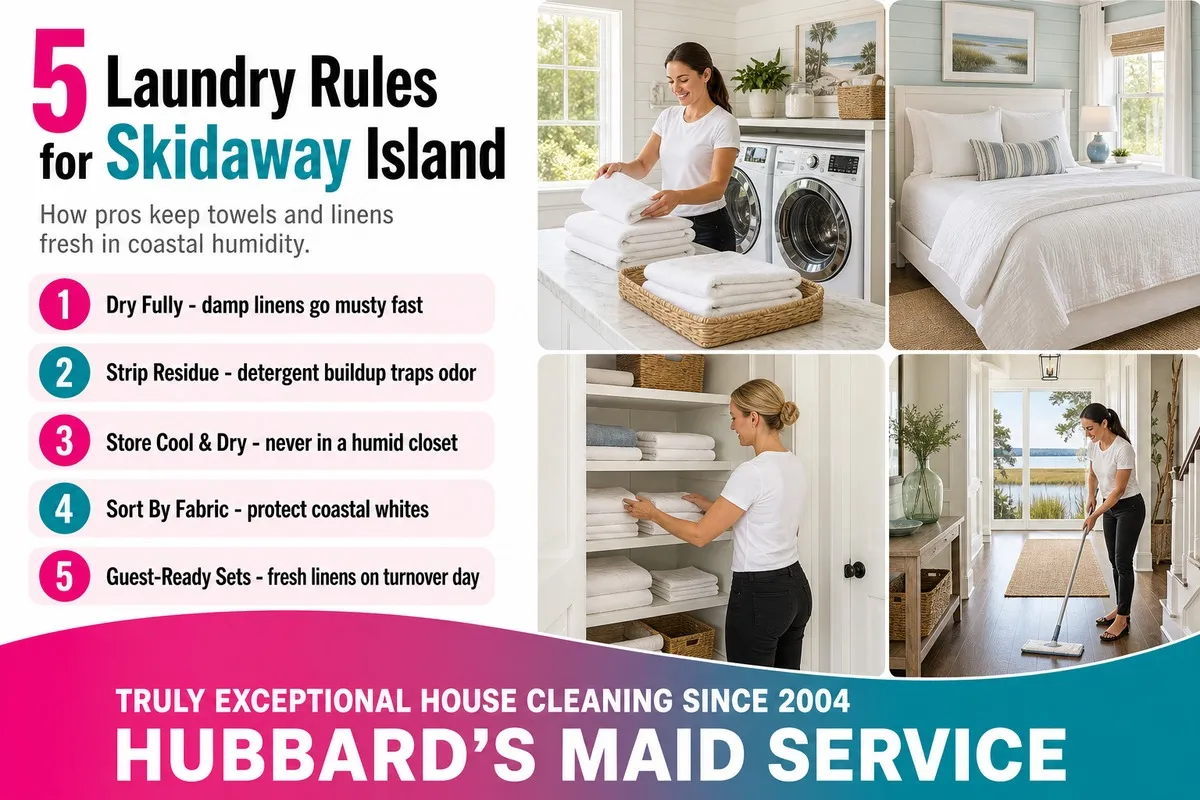
- High humidity and salt air on Skidaway Island keep fabrics damp, encouraging mildew; summer dew points often trap moisture indoors.
- Wash linens hot to strip odors, cut detergent dosage, and never use fabric softener on towels; use vinegar and baking soda correctly.
- Dry loads completely, pull promptly, then air fold for 20 to 30 minutes; a small dehumidifier cuts drying time.
- Maintain machines: clean dryer vents annually, wash lint screen and gasket regularly, run monthly hot cycle to remove residue and odors.
- Proper storage prevents problems: avoid exterior wall closets and sealed plastic, rotate guest linens, or use a maid service like Hubbard's Maid Service.
Ask anyone who lives on Skidaway Island what surprised them most about coastal Georgia, and laundry rarely makes the list — until the first summer. Towels that never quite dry. Sheets that smell faintly of a boat cabin two days after washing. A closet in a guest room that develops its own atmosphere while no one is looking.
None of that is a housekeeping failure. It’s physics. Skidaway sits in the middle of tidal marsh between the Wilmington and Skidaway rivers, and the air here carries moisture and salt nearly year-round. In July and August, outdoor dew points in the Savannah area frequently sit in the mid-to-upper 70s, which means the air inside a home can hold enough moisture to keep fabric damp long after the dryer stops. Damp fabric plus warm air is exactly what mildew needs.
Here’s how our teams handle laundry and linens in island homes — and why a maid service that does laundry is one of the more practical upgrades for households in The Landings and along Diamond Causeway.
Why Lowcountry Humidity Ruins Laundry
Three mechanisms do most of the damage:
Incomplete drying. A dryer removes water until the load reaches equilibrium with the surrounding air. When the laundry room air is humid — which it is in most island homes without dedicated dehumidification — that equilibrium point is higher. Fabric that feels dry can still hold enough moisture to support microbial growth once it’s folded and stacked.
Residue that feeds odor. Detergent and fabric softener residue traps body oils inside fibers, particularly in towels. That residue is what smells when it gets warm and damp, which is why a “clean” towel can develop an odor within hours of a shower.
Salt air. Airborne salt is hygroscopic — it attracts and holds water. On the east side of the island and anywhere with regular marsh breeze, salt settling on linens stored in a closet gives moisture somewhere to cling.
The Professional Approach to Island Laundry
Wash hot enough, and less often than you think — with soap
For towels, sheets, and anything that has developed an odor, water temperature matters more than detergent brand. Most household laundry does fine warm, but linens that smell need hot water. Cut the detergent dose to about half of what the cap suggests: in the soft water common to the area, the recommended dose is usually more than the machine can rinse out, and the excess is exactly what causes the smell.
Strip the residue once, then maintain
If towels are already sour, a single hot wash with no detergent plus one cup of white vinegar in the drum will break down residue and mineral buildup. Follow with a second hot wash using a small amount of detergent, then a rinse with a half cup of baking soda if any odor remains. Do not mix vinegar and baking soda in the same cycle — they neutralize each other, and you’ll accomplish nothing but foam. And skip fabric softener on towels permanently; it coats fibers, reduces absorbency, and creates the exact residue you just removed.
Dry fully, then let it breathe
Pull loads promptly — a warm, damp load sitting in the drum for two hours in August is a mildew starter kit. Then leave folded linens in open air for 20 to 30 minutes before they go into a closet. Air-drying on a screened porch sounds appealing on Skidaway, but in high humidity it often leaves fabric damper than when it came out of the machine.
Maintain the machines, not just the clothes
- Clean the dryer vent duct annually. Lint plus humid air equals reduced airflow and longer drying times — and it’s a genuine fire risk. The U.S. Consumer Product Safety Commission has long identified failure to clean dryers as a leading cause of home dryer fires.
- Wipe the front-loader gasket weekly and leave the door ajar between loads. That rubber fold is the number one source of washer odor in coastal homes.
- Run a hot empty cycle monthly with a cup of vinegar or a machine cleaner to clear the drum and pump.
- Wash the lint screen with soap every few months. Dryer sheets leave an invisible film that blocks airflow; if water beads on the screen instead of passing through, it needs washing.
Where Linens Are Stored Matters as Much as How They’re Washed
In island homes we frequently find the real problem isn’t the wash at all — it’s the closet.
- Never store linens against an exterior wall in a closet with no air movement. If that’s the only option, leave a two-inch gap so air can circulate behind the stack.
- Skip the plastic bins for long-term storage. Sealed plastic traps whatever moisture was in the fabric when you packed it. Breathable cotton bags are better for seasonal blankets and guest linens.
- Rotate guest-room linens even when no one visits. Linens that sit untouched for three months in a closed guest room are the ones that smell when the grandkids arrive.
- A small dehumidifier in the laundry room shortens drying times measurably and pays for itself in a single Lowcountry summer.
Should a Cleaning Service Handle Your Laundry?
We’ll be candid: plenty of Skidaway households don’t need it. If you’re home most days, keep up with loads, and have a reliable dryer, laundry is one of the easier chores to keep on top of.
Where a service genuinely helps:
- Households with guests coming through regularly. Turning over guest beds and bath linens on schedule is exactly the kind of task that slips.
- Seasonal residents. Fresh, properly stored linens waiting when you return is a different homecoming than unpacking a musty guest room.
- Anyone managing mobility limits or a demanding schedule. Hauling baskets and standing to fold are the hardest parts, not the washing.
- Homes with a persistent odor problem. A one-time residue strip plus a corrected process usually fixes it for good.
Our laundry and light cleaning service can run loads during a scheduled visit, fold and put away, or handle linens as part of a broader clean. Many clients add it to a recurring maintenance clean rather than booking it separately, which keeps the visit efficient. For more garment-level detail, our earlier guide on keeping clothes fresh and wrinkle-free covers folding and storage; this article focuses on the humidity and linen problems specific to island living.
Room-by-Room: Where Linen Problems Actually Start
- Primary bath: the most-used towels rarely get the hottest wash. If one set smells and the rest don’t, that set is the one you rotate fastest and dry least.
- Guest bath: decorative towels that hang for months absorb ambient moisture and dust. Wash them on a schedule even if nobody has touched them.
- Laundry room: if it sits off a garage — common in island homes — it is the most humid room in the house, and the least ventilated. That is the worst possible place to leave a finished load.
- Bedroom closets on exterior walls: the wall stays cooler than the room, which is where condensation forms behind stacked linens.
- Under-bed storage: convenient and consistently the source of the “old house” smell in guest rooms. Breathable bags, never sealed plastic.
What We Do Differently on Coastal Homes
A few practices we’ve adopted specifically because of where we work. They’re not secrets; they’re just the result of twenty years of repetition.
- We check the washer gasket and dryer lint screen on laundry visits. Cleaning linens in a machine that is itself the source of the odor is wasted work.
- We fold and place, rather than stack and leave. Warm linens dropped into a closed closet are the most common way a good wash gets undone.
- We flag moisture, not just dirt. Damp baseboards, condensation on window frames, a musty return-air vent — these get reported, because they’re cheaper to fix early.
- We adjust for salt exposure. Homes with regular marsh breeze get more attention on window tracks, thresholds, and hardware, where salt accelerates corrosion and holds moisture.
Frequently Asked Questions
Will hot water ruin my sheets?
Cotton sheets and towels tolerate hot water well. Elastane blends, performance fabrics, and some printed linens do not — check the label. When in doubt, wash warm and reduce detergent rather than pushing the temperature.
Do dryer balls help in humid climates?
Modestly. Wool dryer balls improve air movement through a load and can shorten drying time slightly, and they’re a reasonable substitute for fabric softener. They are not a fix for an over-humid laundry room or a blocked vent.
Can you do laundry if I’m not home?
Yes. Most of our laundry clients aren’t there. We work from written instructions in your file — which loads, which detergent, where things go — so the result is the same whether you’re present or in another state.
Is a wash-and-fold service the same as dry cleaning?
No. We handle household laundry and linens on site in your machines. Anything requiring solvent cleaning or professional pressing should go to a dry cleaner, and we’ll tell you when that’s the better call.
A Note on Whole-Home Humidity
Laundry is often the first symptom of a broader moisture issue. If towels smell, closets feel heavy, and window interiors show condensation, the house is running humid overall — and that also shows up as mildew in shower caulk and a musty return-air smell. Keeping indoor relative humidity in the 45 to 55 percent range solves several problems at once. The U.S. Environmental Protection Agency notes that controlling indoor moisture is the primary way to prevent mold growth. Our guide to maintaining a clean home in Savannah’s humid climate goes deeper on the whole-home side.
Local Help on Skidaway Island
Hubbard’s Maid Service has cleaned homes across Chatham County since Nicole Hubbard founded the company in 2004. We’re licensed, bonded, and insured, with more than 800 Google reviews, and we’ve been a Cleaning For A Reason partner since 2010. Our crews are used to gated-community access, guest-turnover timing, and the practical realities of cleaning homes surrounded by marsh and salt air — including neighbors on Isle of Hope and Wilmington and Tybee Islands.
To see what’s included for your neighborhood, visit our Skidaway Island house cleaning page, or request a quote and tell us how your linens are behaving. You can also reach our Savannah office at (912) 961-9131. If a few process changes will fix it, we’ll say so.
Share this article
Related Posts



Follow us
A quick overview of the topics covered in this article.