

Closing Up and Opening a Second Home in Shell Point, SC: A Marsh-Front Checklist
- In Shell Point, control humidity: set thermostat to high 70s, use a whole-home or standalone dehumidifier, remove water sources before leaving.
- Empty and dry the kitchen: refrigerator emptied or propped open, dishwasher and washer dry, and pantry goods sealed or removed to avoid pests.
- Wash salt off exterior glass, sliders, door hardware, and any stainless now to prevent film, staining, and pitting.
- Make the house checkable: leave keys, arrange a neighbor or service visit, and install a Wi-Fi temperature and humidity sensor.
A house on the peninsula between Battery Creek and the Broad River does something unusual when you leave it alone: it does not simply sit there getting dusty. It breathes. Marsh humidity moves through it, salt air works on the hardware, and closed-up rooms develop that particular musty smell that greets you at the door when you come back in October.
If you are a snowbird, a second-home owner, or a Navy or Marine Corps family who travels for stretches at a time, the way you close a Shell Point house matters as much as the way you clean it. Here is the checklist we use — closing up, and opening back up.
Before you leave: closing up
1. Deal with moisture first, everything else second
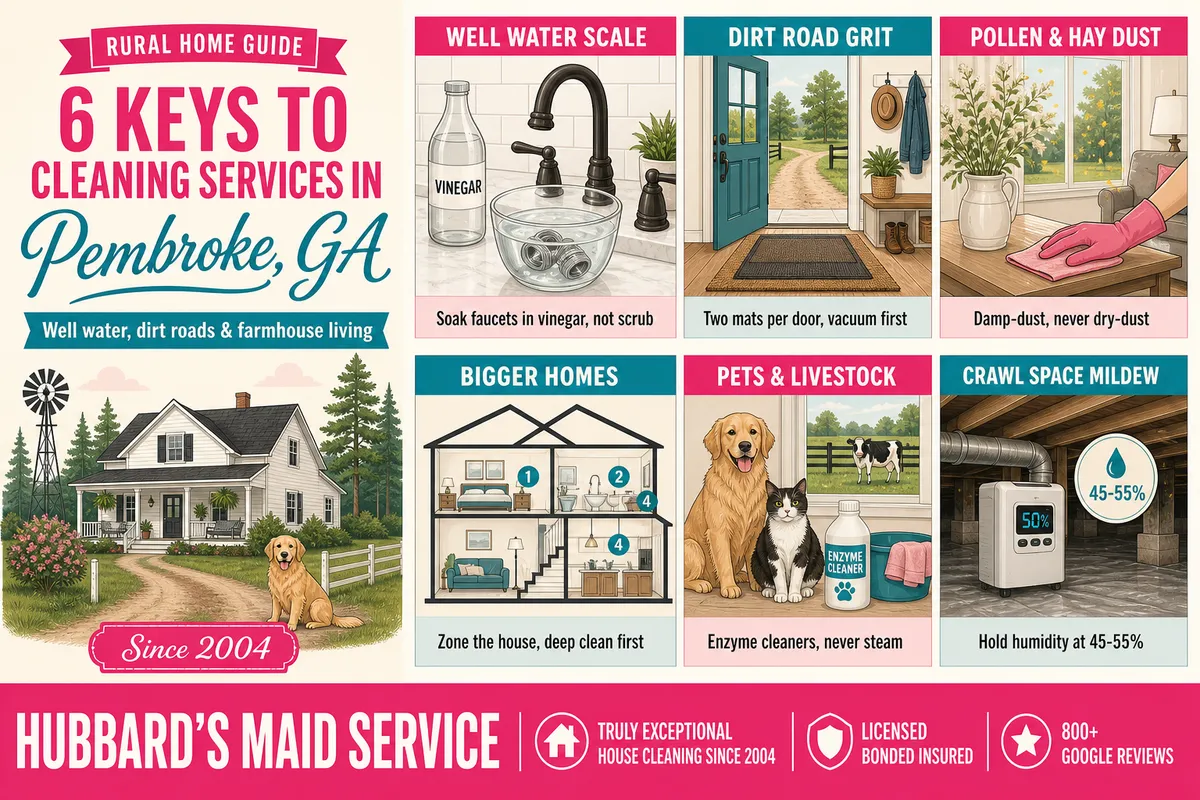
Humidity is the whole ballgame on the water. Set the thermostat to somewhere in the high 70s rather than turning the system off entirely — cooling occasionally is what keeps indoor humidity from climbing into mold territory. A standalone dehumidifier with a drain line, or a whole-home dehumidifier if the house has one, is the better answer for long absences.
Then remove the water sources you are leaving behind: run the dishwasher empty and leave the door cracked, empty and dry the washing machine and leave its door open, and check under sinks for slow drips. A drip that would be nothing over a weekend is a real problem over three months.
2. Empty the kitchen properly
Refrigerator emptied, wiped, and either running with a box of baking soda or fully defrosted with the doors propped open. Pantry goods into sealed containers or out of the house entirely — palmetto bugs are opportunists, and an open sleeve of crackers is an invitation.
3. Wash the salt off before it sits
Salt film on windows, sliders, and stainless hardware gets harder to remove the longer it sits and can pit stainless outright. Give exterior-facing glass, door hardware, and any stainless a wet wash and a dry buff before you go, not after you get back.
4. Fabrics, beds, and closets
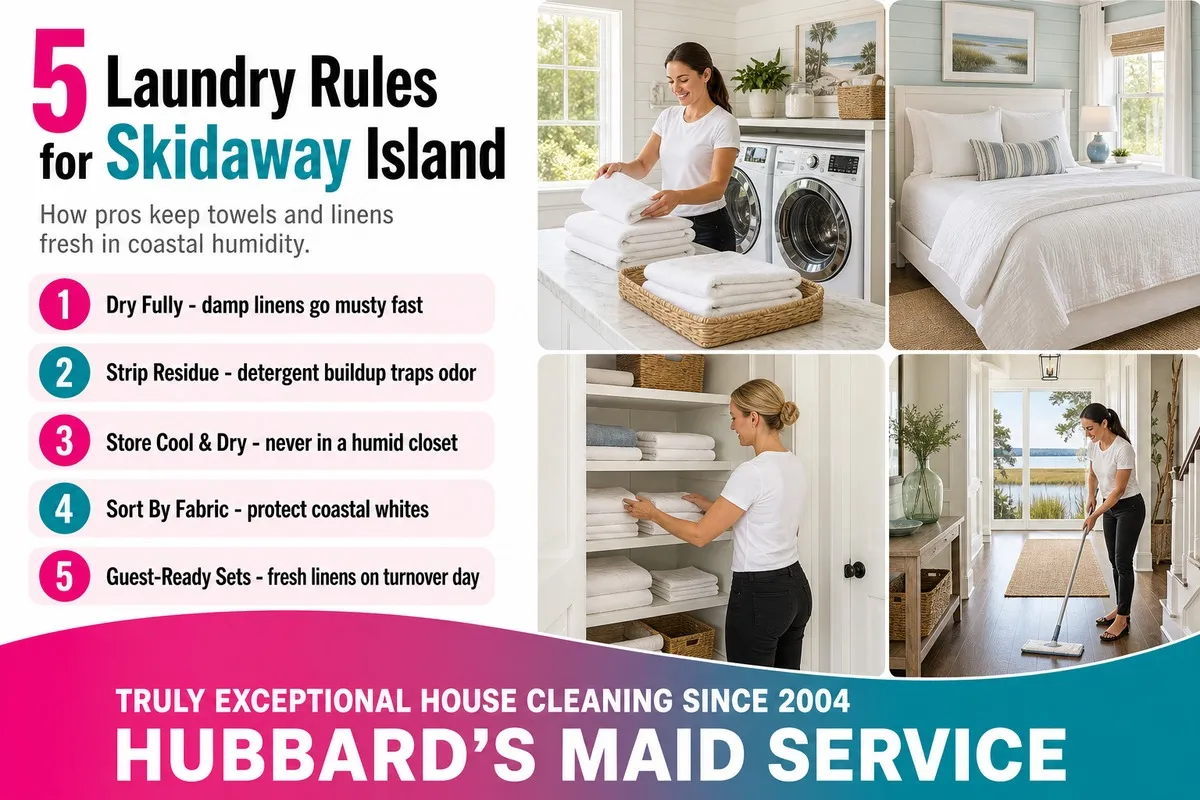
Strip and launder linens, then either store them sealed or make the beds up fresh — coming back to bedding that has sat damp for months is unpleasant. Leave closet doors ajar so air can circulate; closed closets on exterior walls are the first place mildew shows.
5. Screens, porches, and tracks
Screened porches collect sand and pluff-mud grit that blows into door tracks. Vacuum the tracks out before you leave, so returning does not mean grinding grit under a slider.
6. Leave the house findable and checkable
Someone should have keys and eyes on the place. A cheap Wi-Fi temperature and humidity sensor pays for itself the first time it tells you the HVAC quit in July.
Coming back: the opening routine
The order here matters, because you want air moving before you start disturbing dust.
- Air it out. Open windows on opposite sides of the house for cross-flow if the weather cooperates, and run ceiling fans. Twenty minutes of this does more for the smell than any spray.
- Change the HVAC filter and run the system. A filter that sat all season is holding what it caught.
- Run every faucet and flush every toilet. Dry P-traps let sewer gas into the house and are a common source of “what is that smell.” Running water for a minute in each fixture refills them.
- Check the water heater and under every sink for anything that started while you were gone.
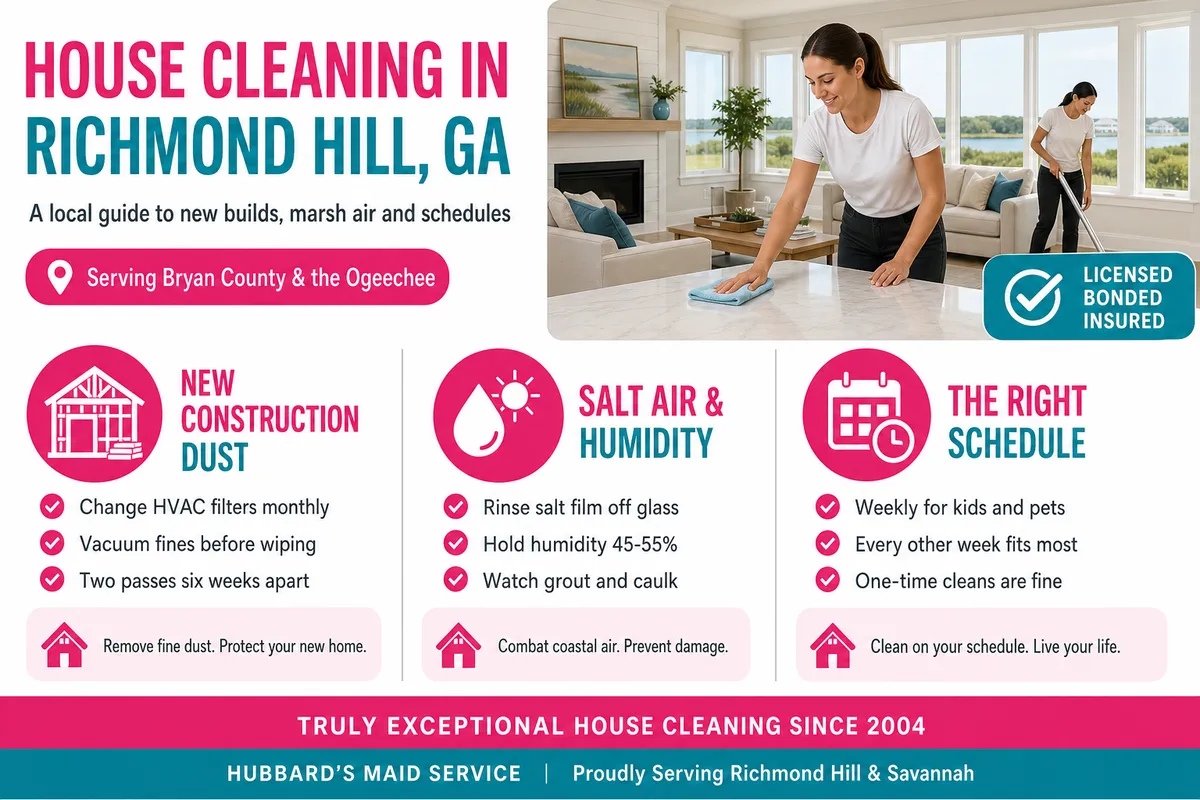
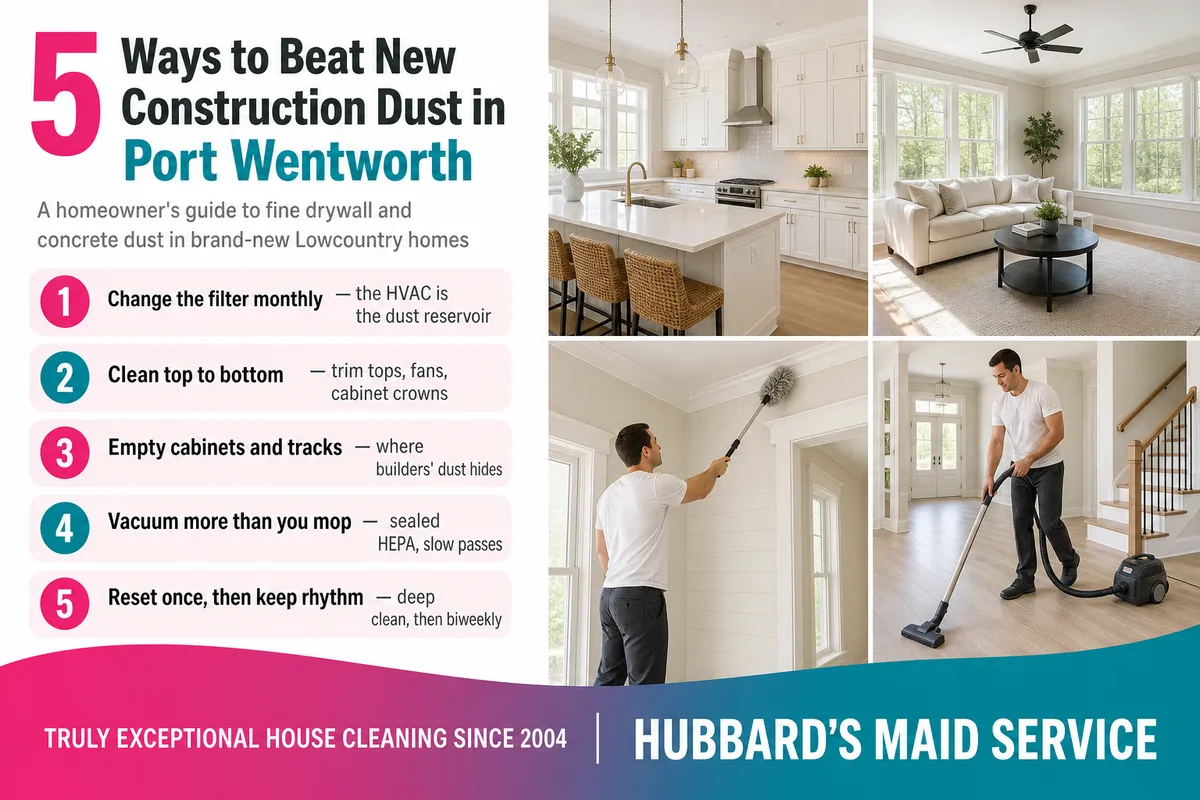
- Then clean, ceiling-down. Fans, light fixtures, vents, blinds, window tracks, surfaces, floors last.
- Wash the glass. Salt film builds even on a closed-up house, and clean glass changes how the whole place feels.
- Beds and towels fresh, and the kitchen restocked.
The mistakes we see most
Turning the AC completely off. It saves less than people think and creates exactly the conditions mold likes. Set it high, do not shut it down.
Using bleach on marsh-air mildew and calling it done. Bleach lightens the stain on porous surfaces but does not always remove what is growing beneath. On grout and caulk, cleaning followed by drying — and better ventilation going forward — is what actually keeps it from returning.
Closing a house up dirty. Crumbs, a half-full trash can, and a damp bathmat behave very differently over four months than over four days. The cleaner the house goes to sleep, the easier it wakes up.
Mopping before vacuuming. On a peninsula where sand comes in from docks and porches, wet-mopping over grit sands your own floors.
Having it done for you before you arrive
This is the service most Shell Point second-home owners actually want: a Top to Bottom clean scheduled in the two or three days before you arrive, so you walk into a house that smells right, with fresh beds and clean glass, instead of spending your first day of a trip cleaning. On the other end, a closing clean after you leave means the house sits clean rather than sits dirty.
We have cleaned Lowcountry homes since 2004 with background-checked, trained teams — licensed, bonded, insured, and guaranteed. For homes that sit empty part of the year, we can also work from a key or lockbox arrangement and let you know what we find, which is often how people learn about a leak in week two rather than month three.
You can read more about our house cleaning service in Shell Point, SC, or the nearby communities on the same routes: Beaufort, Port Royal, and Burton.
Call (843) 781-8945, Monday through Friday, 8:00 a.m. to 4:30 p.m., and tell us your arrival date.
Share this article
Related Posts



Follow us
A quick overview of the topics covered in this article.