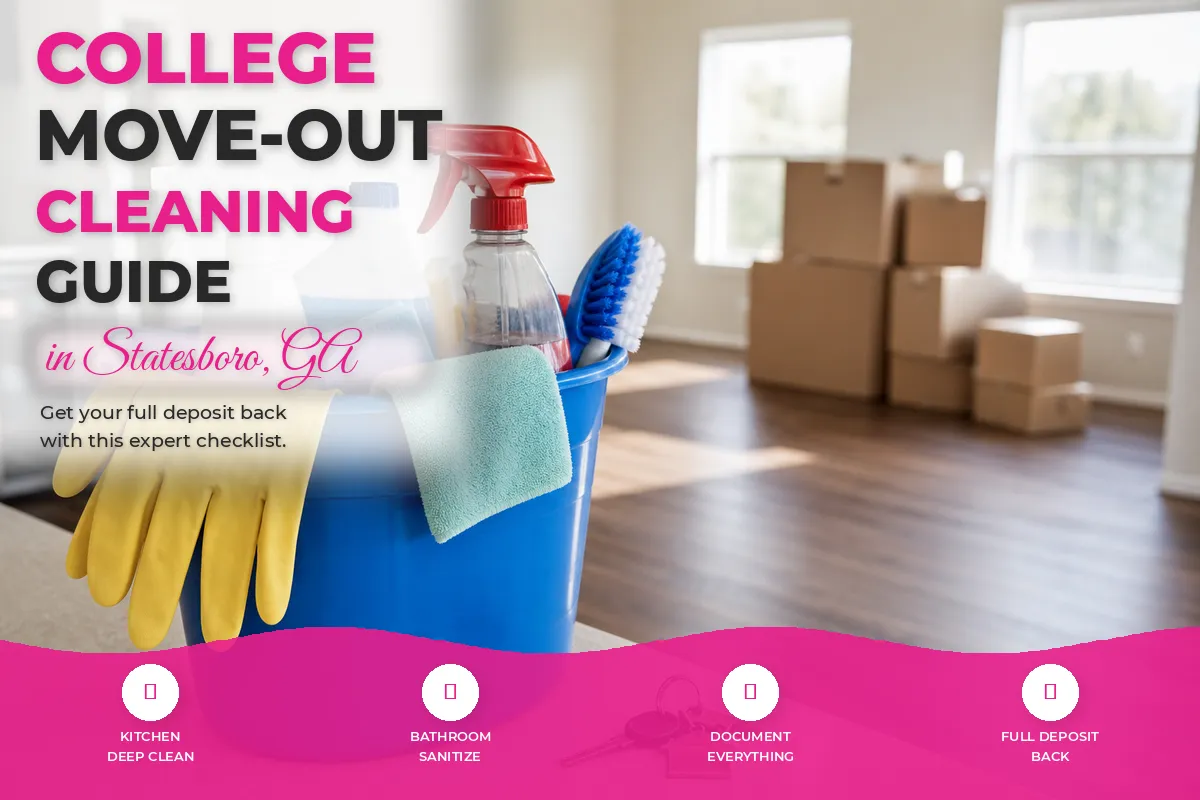


Sand, Pine Pollen and Acreage Homes: A Springfield, GA Cleaning Guide
- Acreage homes in Effingham County get dirtier faster: gravel driveways, pines (pine pollen), and coastal-plain humidity.
- Build a working transition zone at the door most Springfield homes use: outside scraper mat, inside absorbent mat, bench, lipped boot tray, hard floor.
- Vacuum first, then damp-mop; sealed HEPA vacuum with beater bar off protects hard floors from abrasive sand.
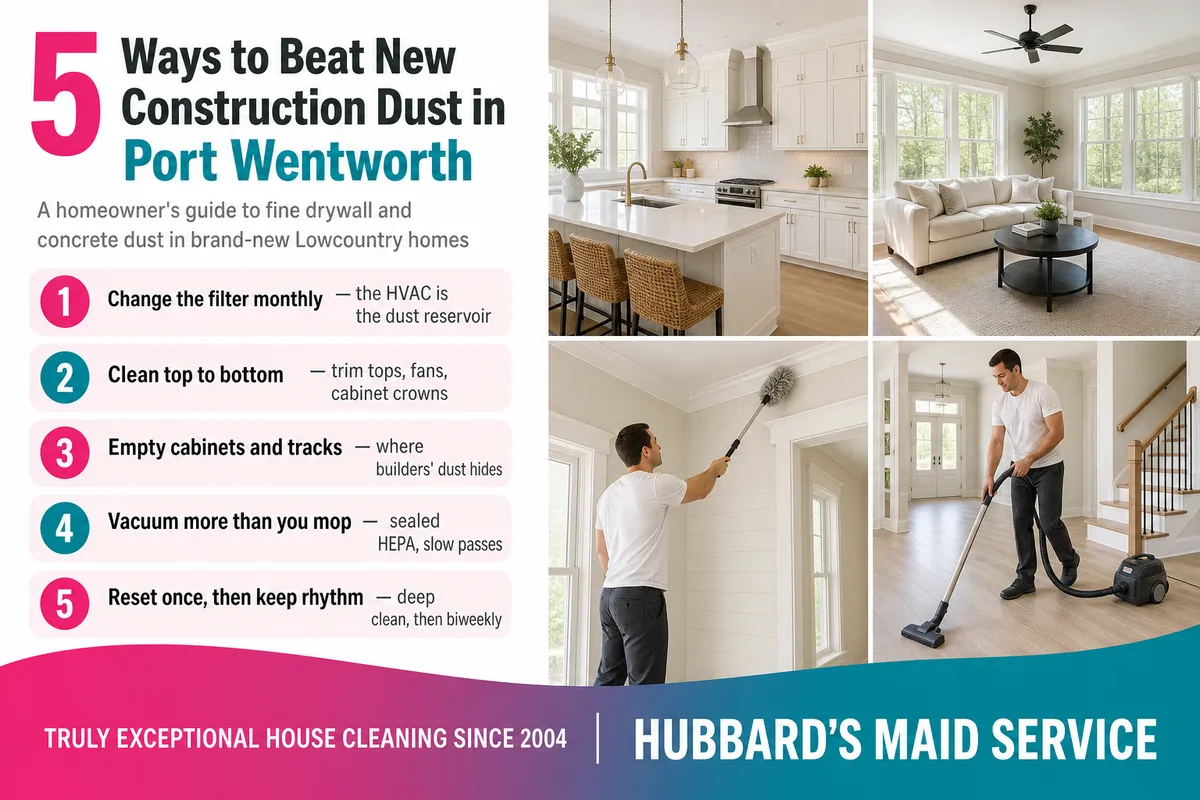
- Target hidden dirt: window tracks, door casings, ceiling fan blades, HVAC returns, behind appliances, and porch sliders for pollen and sand.
- Start with a Top to Bottom reset, then biweekly maintenance (weekly for kids or dogs); add spring pollen and pre-holiday November cleans.
Cleaning a house on an acre or more in Effingham County is a different job than cleaning a house in a subdivision, and anyone who has moved out to Springfield from Savannah figures that out within about a week. The dirt is different, the entry points are different, and the pace at which a clean house stops being clean is different. Sandy coastal-plain soil does not behave like clay. It does not stick to your shoes and stay there — it dries, it powders, and it travels.
Here is how we approach a Springfield, GA home that sits on real land, and what you can do between visits to keep the sand out of the living room.
Why acreage homes get dirty faster
Three things are working against you.
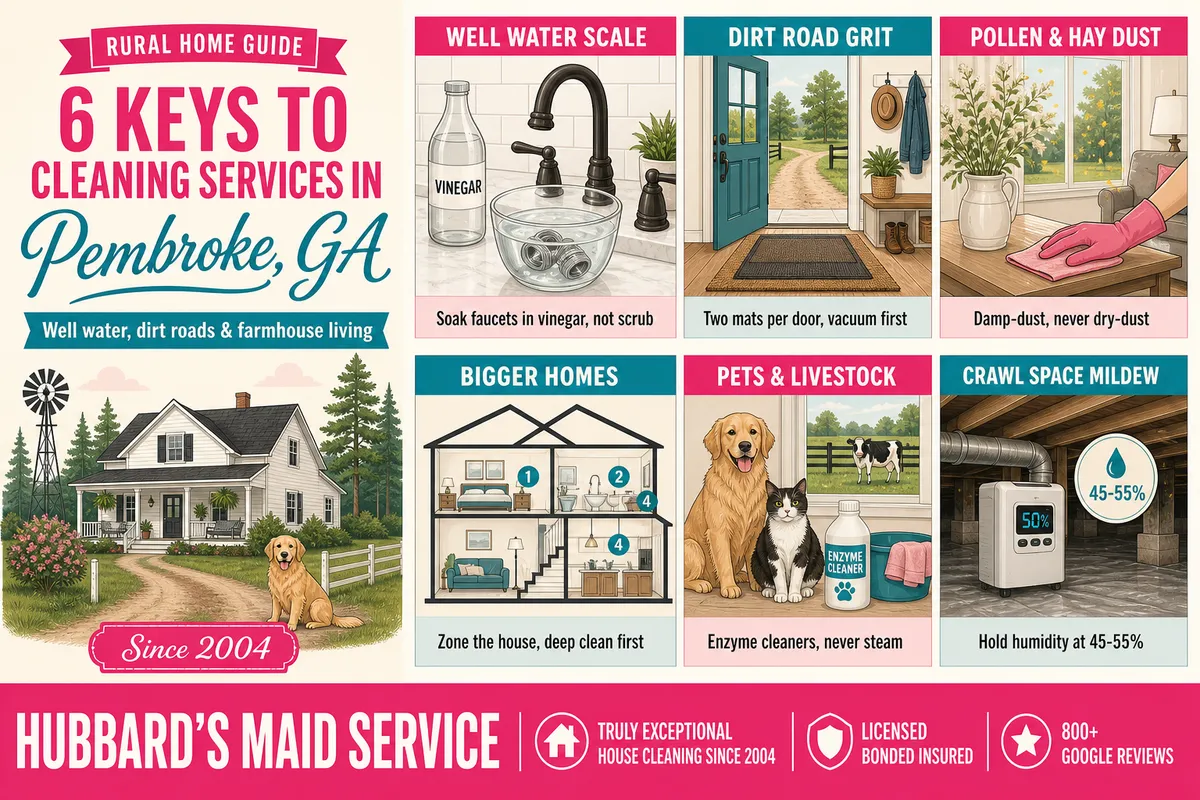
The driveway. Most homes off Highway 119, Old Louisville Road, and the county roads around Springfield have gravel or dirt-and-sand driveways rather than poured concrete. Every trip in and out grinds a little more of that surface into fine grit, and vehicles carry it to the door. Concrete traps dirt; sand releases it.
The pines. Effingham is loblolly country. Pine straw, pine bark, and — for six weeks every spring — pine pollen coat every horizontal surface outside the house, and the yellow film comes in on clothing, pets, and open windows. Pollen is also sticky in a way ordinary dust is not; it bonds to screens and window tracks and needs to be washed off, not wiped.
The humidity. Coastal-plain summers hold moisture in the air, and airborne dust that would otherwise settle and stay put instead clings to blinds, baseboards, and the tops of door casings. That is why a house that “looks fine” can still feel dusty when you run a hand along a windowsill.
Build a real transition zone
The single highest-return change in an acreage home is not a cleaning product. It is a properly built transition zone at the door people actually use — which in most Springfield homes is the side door, the garage entry, or the back door off the porch, not the front door.
What a working transition zone needs:
- Two mats, not one. A stiff scraper mat outside, and an absorbent, washable mat inside. A single mat either scrapes or absorbs; it will not do both.
- A place to sit down. People take shoes off when it is easy. A bench turns a good intention into a habit.
- A boot tray with a lip. Sand dries and falls off overnight. A lipped tray keeps that pile contained and dumpable.
- A hard floor. If your mudroom is carpeted, you have built a filter that you cannot empty. Vinyl plank, tile, or sealed concrete will save you more cleaning time than any other single change.
Do that, and you have cut off most of the sand before it can reach the living room, where it grinds into rug fibers and hardwood finish.
Vacuum more, mop less
This is counterintuitive, but on sandy floors mopping too early actively hurts. Sand is abrasive. Push a wet mop across a floor with grit still on it and you are dragging that grit over the finish, which is how hardwood and luxury vinyl in rural homes end up dulled and micro-scratched years before they should be.
The order matters:
- Dry-sweep or vacuum first, thoroughly, including corners and along baseboards where sand accumulates.
- Then damp-mop with a well-wrung mop and a neutral-pH cleaner.
- Change the water. Sandy homes turn mop water grey faster than you would expect, and past a certain point you are redistributing dirt rather than removing it.
For vacuums, a sealed HEPA unit with a hard-floor setting that shuts off the beater bar earns its price in a house like this. Beater bars on hard floors fling sand rather than lift it.
The spots acreage homes hide dirt
When our teams do a Top to Bottom clean in a Springfield farmhouse or an older place near the courthouse square, these are the areas that show the most neglect — not because homeowners are careless, but because they are genuinely hard to see:
- Window tracks and sills. Sand and pollen collect and then cement together with humidity. These need to be vacuumed out and then wiped wet, in that order.
- Tops of door casings and window trim. In older homes with deep moulding, this is where years of dust quietly accumulate.
- Ceiling fan blades. A fan running in a dusty house becomes a dust distributor. Wipe blades with a damp microfiber and a pillowcase over each blade to catch fallout.
- HVAC returns and registers. In a home this dusty, a filter that a subdivision homeowner changes quarterly should be checked monthly.
- Under and behind appliances. Especially in farmhouse kitchens where the range sits in an alcove.
- Porch-side sliders and screens. Pollen and sand collect in the screen mesh and get pulled inside every time the door opens.
A realistic Springfield cleaning rhythm
For most homes here, the pattern that works is a deep reset followed by consistent maintenance:
One Top to Bottom clean to get the house to a true baseline — fans, vents, trim, tracks, inside appliances, baseboards, the whole ceiling-down pass. Trying to reach that baseline through weekly maintenance cleans alone is slow and frustrating.
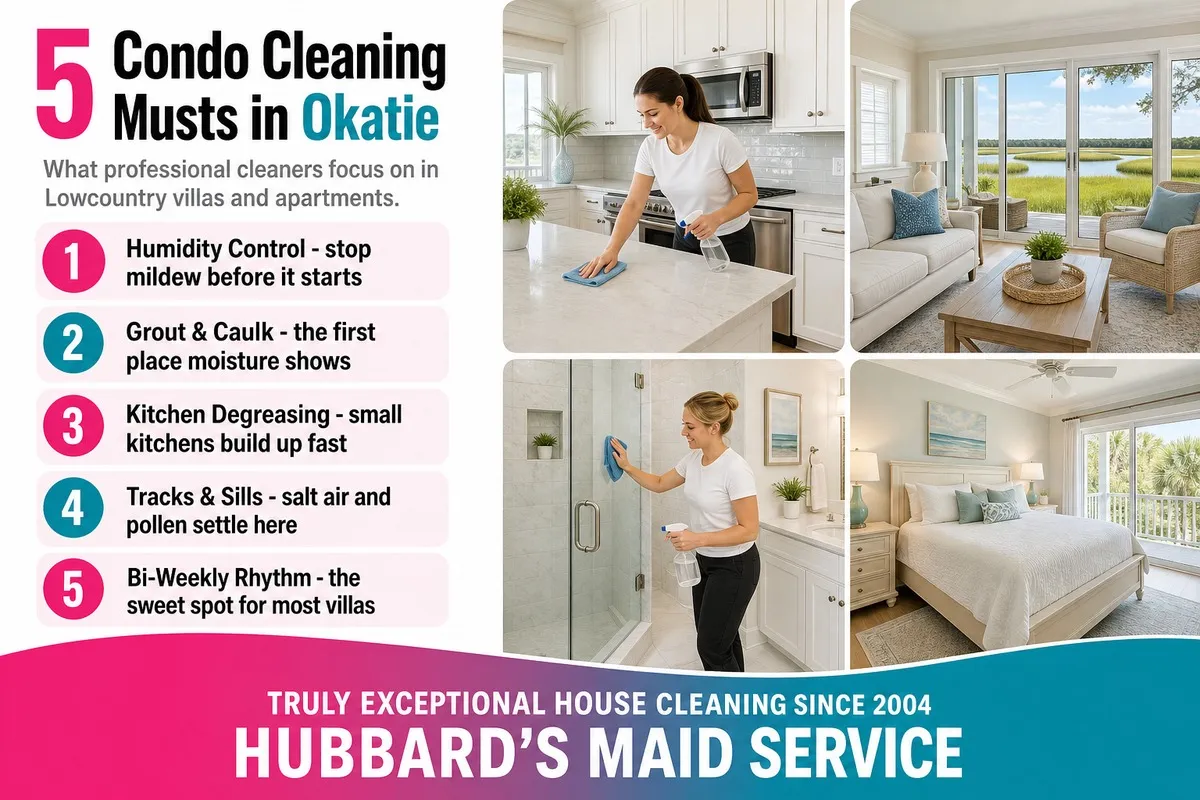
Then every two weeks for most families, or weekly if you have dogs, kids in ballfield season, or an active job site of a yard. Monthly works for retired couples and smaller households, though in pollen season most people move up temporarily.
Two seasonal add-ons worth scheduling: a late-March or early-April clean after pine pollen finishes, and a pre-holiday clean in November. Those two dates cover the worst of the year in Effingham County.
What professional help changes
Our teams are in Effingham County every week — Springfield, Rincon, and Guyton — so we are not making a special trip out to you, and that keeps scheduling flexible. Every clean is done by a background-checked, trained team, and we are licensed, bonded, and insured. If something is not right, we come back at no charge.
If you would like to see what regular service would look like for your home, you can read more about our house cleaning service in Springfield, GA, or check the neighboring towns we cover the same week: Rincon, Guyton, and Port Wentworth.
Call us at (912) 961-9131, Monday through Friday, 8:00 a.m. to 4:30 p.m., and we will put together a quote based on your home rather than a generic square-footage guess.
Share this article
Related Posts




Follow us
A quick overview of the topics covered in this article.