
How to Clean Oven Glass (and the Entire Oven)
- Always clean from top to bottom so debris from upper surfaces does not re-soil lower areas.
- Never clean a warm oven; wait until it is completely cool to avoid burns and improve cleaning effectiveness.
- Use a paste of baking soda and water on interiors; let sit about 12 hours, then wipe and rinse with vinegar.
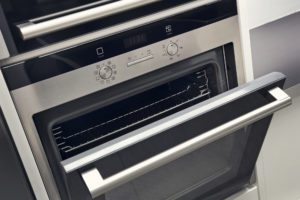
- Remove the oven door per your manual to access inner glass; clean with baking soda, a vinegar soaked rag, and a nonabrasive sponge.
- Perform light wipe downs after cooking; deep clean every three to six months; consider hiring Hubbard's Maid Service for deep cleans.
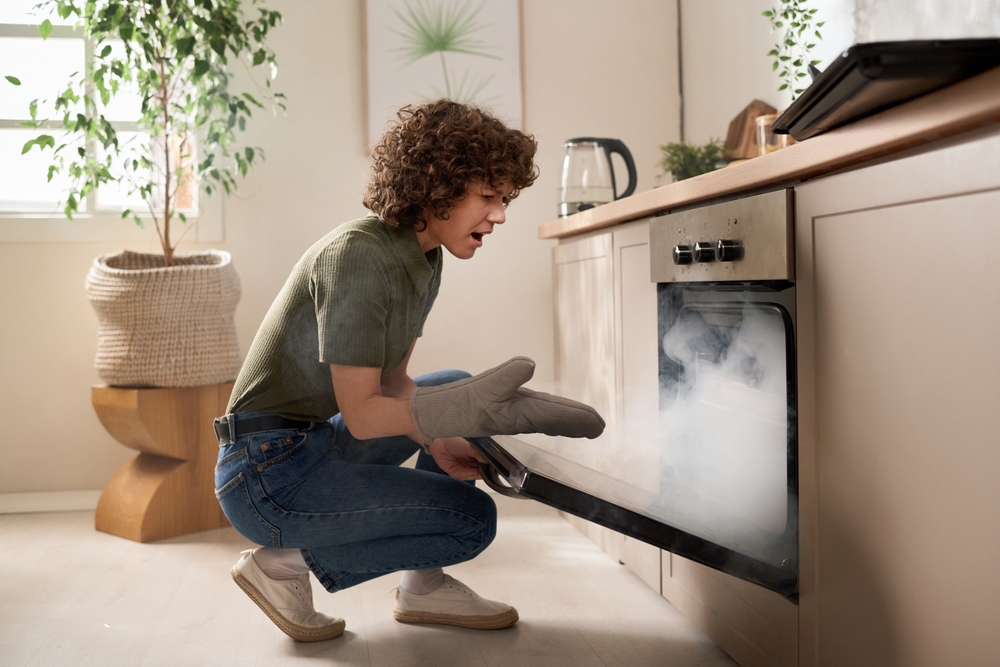
It’s not a fun job to clean oven glass, but it’s necessary. Without regular cleaning, baked-on grease and food residue can produce smoke that affects the taste of your food and releases harmful fumes into your kitchen.
Whenever you cook, it’s likely that grease splatters, food drips, and steam coat the inside of your oven — including the glass door. Over time, this builds up into a stubborn, opaque layer that looks unsanitary and makes it impossible to check on your food without opening the door.
In this guide, we’ll walk you through how to clean oven glass and the entire oven interior, using safe household products that get professional results.
What You Need to Clean Your Oven
- Baking soda
- White distilled vinegar
- Dish soap
- Warm water
- Spray bottle
- Non-abrasive sponge or scourer
- Microfiber cloths
- Commercial glass cleaner (for the final shine)
- Old towels or newspaper (to protect the floor)
- Rubber gloves
Choosing the Best Products for Your Oven
Commercial oven cleaners work, but many contain harsh chemicals that produce strong fumes. For a safer, equally effective approach, baking soda and vinegar are the go-to combination. Baking soda is a mild abrasive that lifts baked-on grease without scratching surfaces, while vinegar cuts through grease and disinfects.
If you prefer a store-bought cleaner, choose a non-toxic, fume-free formula — especially important if you have children, pets, or respiratory sensitivities.
How to Clean the Entire Oven: Top to Bottom
The most important rule of oven cleaning: always work from top to bottom. If you start from the bottom, drips and debris from above will dirty the areas you’ve already cleaned, wasting time and effort.
Step 1: Make Sure Your Oven Is Cool
Never clean an oven that’s still warm. Turn it off and wait until it’s completely cool to the touch to avoid burns and to let cleaning products work more effectively.
Step 2: Start With the Stovetop
Remove burner grates (if applicable) and wipe off large crumbs and debris. Spray the stovetop with your vinegar-water solution and let it sit for a few minutes. Scrub with a non-abrasive sponge, paying attention to knobs, buttons, and the edges where spills accumulate. For stubborn grease, apply a baking soda paste and let it sit for 10 minutes before scrubbing.
Step 3: Remove the Oven Door
Most oven doors can be removed by opening them to the broil position and lifting up and out. Check your owner’s manual for specific instructions. Removing the door makes it much easier to clean the glass thoroughly — especially the gap between the inner and outer panes where grease and crumbs collect.
Step 4: Apply Baking Soda to the Interior
Mix ½ cup of baking soda with enough water to form a thick paste. Spread this paste over all interior surfaces — walls, floor, ceiling, and the door opening. Avoid the heating elements. Let the paste sit for at least 12 hours (overnight is ideal). The baking soda will loosen baked-on grease and turn brown as it absorbs grime.
Step 5: Clean the Oven Glass
While the interior soaks, clean the oven glass. Apply baking soda paste to both sides of the glass. Let it sit for 30 minutes. Then soak a rag in white vinegar and lay it over the paste — the fizzing reaction helps lift stubborn grease.
Gently scrub using circular motions with a non-abrasive sponge. Avoid steel wool or abrasive pads, which can scratch the glass. Rinse with clean water and dry with a microfiber cloth.
Step 6: Wipe Down the Interior
After 12 hours, use a damp cloth to wipe away the baking soda paste and loosened grime. For stubborn spots, spray vinegar directly on the residue — it will fizz on contact with the baking soda and help lift the last of the buildup.
Wipe until no residue remains. Pay special attention to corners, the door hinges, and the floor of the oven where drips collect.
Step 7: Clean the Racks
Soak oven racks in a bathtub or large sink filled with hot water and a few tablespoons of dish soap for 4–6 hours. Scrub with a sponge or brush, rinse, dry completely, and replace.
Step 8: Finish With a Glass Cleaner
Once the glass is clean and dry, use a commercial glass cleaner for a final streak-free shine. Spray lightly and buff with a dry microfiber cloth.
How Often Should You Clean Your Oven?
- Light wipe-down: After every major cooking session (takes 5 minutes)
- Stovetop cleaning: Weekly
- Full oven deep clean: Every 3–6 months, or more often if you cook frequently
- Oven glass: Monthly, or whenever visibility becomes cloudy
Make Your Oven Look New Again
A clean oven doesn’t just look better — it cooks better. Baked-on residue can produce smoke that affects food flavor, trigger smoke alarms, and even become a fire hazard. Regular cleaning keeps your oven efficient and your kitchen safe.
If oven cleaning isn’t your idea of a good time, Hubbard’s Maid Service includes oven and kitchen deep cleaning as part of our top-to-bottom cleaning service. We’ll handle the scrubbing so you don’t have to.
Share this article
Related Posts


Follow us
A quick overview of the topics covered in this article.